
Scaling APIs, data and model serving
Backend Engineering Recruiters for NYC AI Startups
Model calls, customer data and growth all land on your backend. The backend engineers we put forward for New York City AI startups have kept systems like yours running through rapid growth, migrations and late-night incidents.
At a glance
Backend hiring for products built on models
We recruit across backend, platform and infrastructure engineering. Most searches start with one question: what breaks first as you grow?
Roles we recruit for
Senior and staff backend, platform and infrastructure engineers
Stages
Seed to Series C
Where
New York City. In office, hybrid or remote
Who we look for
Engineers who scaled production systems and kept them up through incidents and migrations
Speed
Our last 3 hires averaged 17 days
How you pay
Retained, success-based or embedded. Terms agreed upfront
How we assess
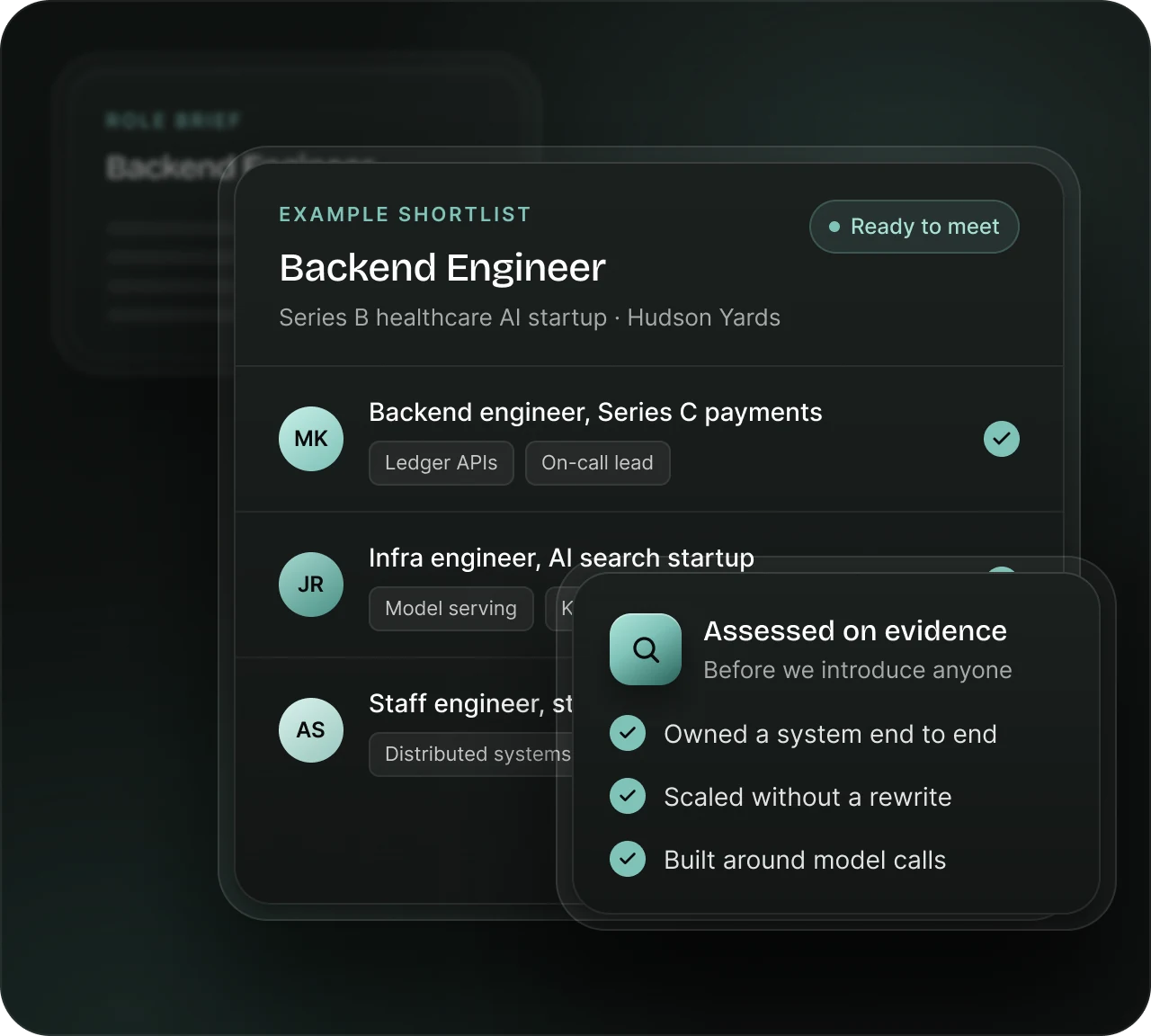
Backend engineers who have been on call for it
Plenty of engineers have worked on a big system. We find the ones who had a part of it to themselves, changed it and answered for it when it broke.
01
Owned a system end to end
Design, deploys, on-call and roadmap. We want to know which service was theirs. Shared ownership is fine if they can name their part.
02
Scaled without a rewrite
10x growth handled with targeted changes, and a clear view on when a rewrite really was the right call.
03
Built around model calls
Queues, caching, rate limits, token and GPU costs. We ask about the backend work around model calls, which is where AI products often slow down.
04
Improved how the team builds
We ask what they changed in how the team works, such as review standards, runbooks or design docs, and whether it stuck.
Systems they owned
Scale and incidents
AI serving work
Notice and pay
System design
Code and API quality
Debugging under pressure

Who runs your search
Liam, Founder of StellarSearch
Our team brings 20+ years of search experience across engineering, AI/ML, product and GTM.
LinkedIn ↗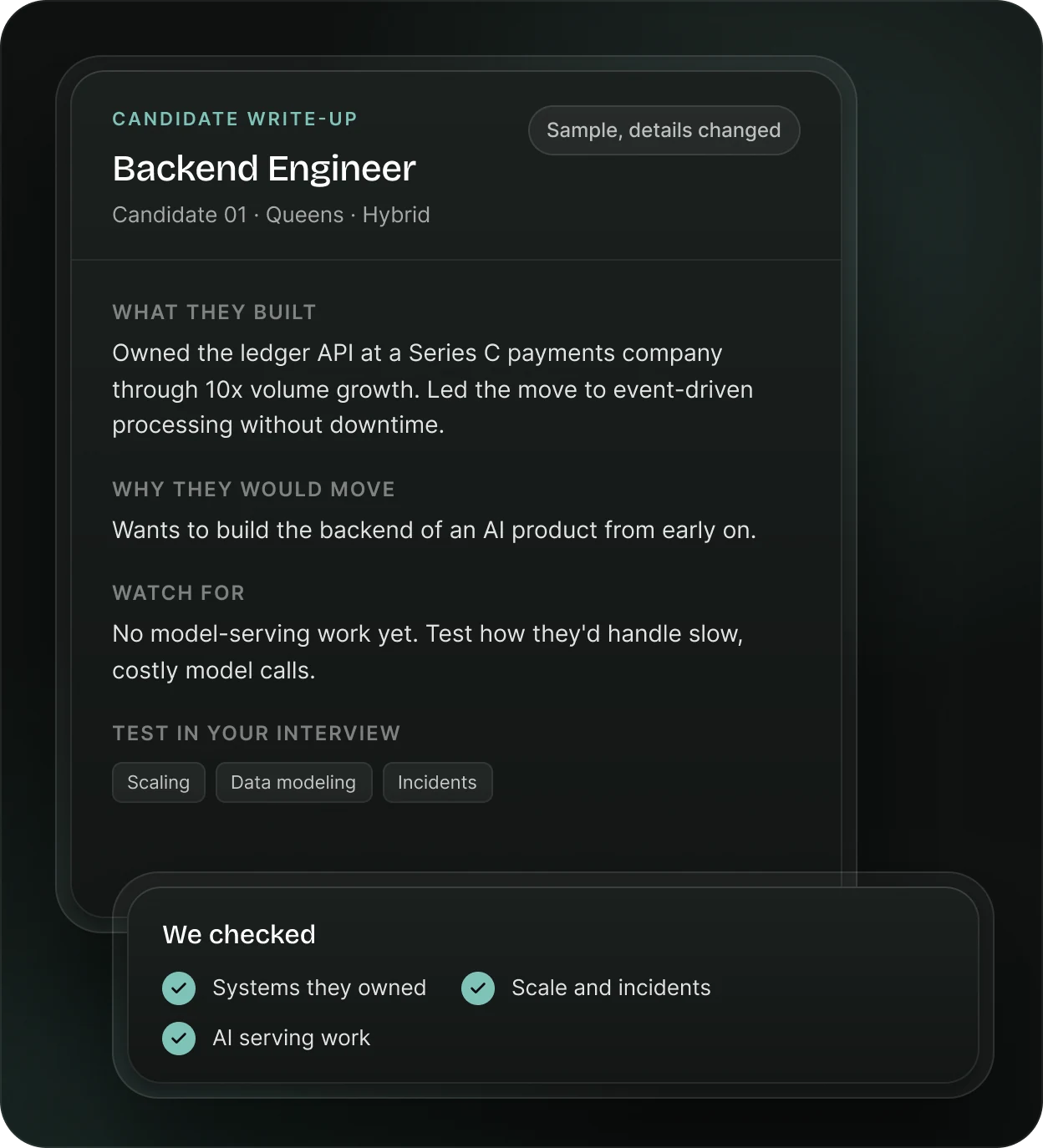
Client feedback
Feedback from founders and the engineers we placed



I'm not really sure how he does it, but he continues to find us top tier talent that fits exactly what we're looking for."


I'm very grateful they reached out."

Would highly recommend."

They did a great job explaining roles, companies, and interview processes and was friendly + supportive throughout."

Where our hires come from
We've placed people from teams like these
We look past titles to the work: ex-founders, early employees and people doing their best work outside the day job.


How we work
How we run your search
From the first call to an accepted offer. What we handle, and the few places we need you.
Learn what you're building, what the hire owns in the first 90 days, and the comp, equity and location you can offer.
One call with the founders.
Map the market from day one. If the problem is sourcing, pay, location, process or the profile, we tell you early.
Agree any changes to the brief.
Approach people who aren't applying anywhere, and assess each one on evidence before they reach you.
Nothing. This part is ours.
Send each candidate with our write-up, then schedule and keep the process moving.
Run your interviews.
Advise on the offer, handle the back and forth, and close.
Make the final call.
If the search isn't working, we tell you fast. We use market data to recalibrate instead of sending weaker candidates for weeks.
Ways to work with us
Three ways to work with us
Pick the model that fits the hire. All terms are agreed upfront, with no hidden fees.
Best for a priority hire
Retained
A dedicated search for the one hire that can't wait. We commit time to your role from day one.
Dedicated search from the first call
Market map shared with you
Fee agreed upfront
Best for a single hire
Success-based
We run the search and you pay when the hire is made.
No fee until you hire
Same assessment on every candidate
Terms agreed before we start
Best for several roles
Embedded
We work as part of your team across several hires, for a monthly fee plus a reduced success fee.
Monthly fee plus reduced success fee
One hiring standard across roles
Works alongside your in-house team
Start a search
Start your backend engineering search
Tell us what you're building. We'll come back with how we'd run the search.
Looking for a role? See open jobs
What does a backend engineer do at an AI startup?
When do we need a platform engineer instead of a backend engineer?
Can you find backend engineers who know our languages?
Should we hire a backend specialist or a full-stack engineer?
What should a backend technical interview cover?
Can a backend engineer also cover data engineering?
How quickly will we see candidates?
We already have an in-house recruiter. Why use you?
How much of the process do you own?
What if the search isn't working?
How do you charge?
Hiring your founding team?
Tell us what you're building. We'll find the experts who can build and ship it.
Start Hiring


